Aretha Franklin a Rose Is Still a Rose Cover Art
thirty. United Together (1980)
In 1 sense, United Together is symbolic of what went incorrect with Franklin'due south career in the early 80s – information technology'due south a high-gloss MOR ballad, a globe away from the music that made her name. But you can't get away from the fact that she sounds amazing, investing the lyric with undeniable ability.
29. Holdin' On (2003)
Her concluding album (after 23 years) on Arista, So Damn Happy made more concessions to Franklin'due south past than its immediate predecessors: she played piano, wrote material and sounded more comfy in her surroundings. You can hear it on Holdin' On, co-written and arranged past Mary J Blige, proof that her song ability was undiminished in her 60s.
28. Thruway of Love (1985)
Laden with guest appearances, home to Sisters Are Doing It for Themselves, 1985's Who's Zoomin' Who restored Franklin to the charts. The album'south production is very of its era: the 60s Motown pastiche Throughway of Love was remixed to appeal to "rock" – ie white – audiences. Just information technology'south such a fantastic vocal, it hardly matters: Franklin, meanwhile, sounds exuberant.
27. It'southward Gonna Get a Bit Better (1979)
Her audience seemed to think Franklin was lowering herself past making the disco anthology La Diva, but the reality is far ameliorate than its wretched reputation suggests, as evidenced by her version of this Lalomie Washburn vocal, far too funky and robust to feel like belated bandwagon-jumping.
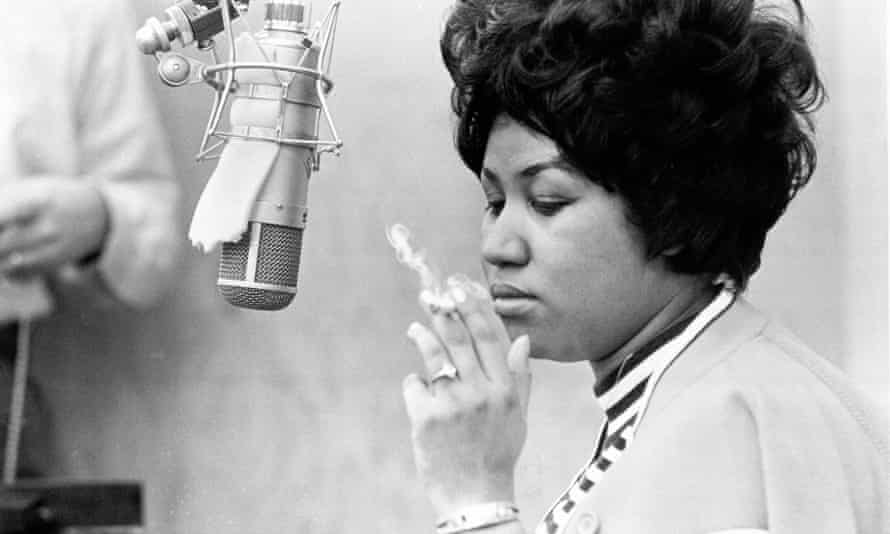
26. Something He Can Experience (1976)
The Curtis Mayfield-helmed soundtrack to the picture Sparkle is an disregarded gem in Franklin's catalogue, his songs neat, the lush proto-disco sound a delight. Something He Can Feel was supposed to be part of the repertoire of the 60s girl group at the eye of the flick, but information technology's too well-written and subtle to sound similar pastiche.
25. I Never Loved a Man (The Way I Beloved You) (1967)
Finally allowed, by her new label Atlantic, to practice whatever she wanted – "They simply told me to sit down at the piano and sing" – Franklin responded with the title track of her tenth album, a dejection into which she appeared to cascade all the pain of her marriage to the appalling Ted White.
24. A Rose Is Still a Rose (1998)
The late 90s attempt to give Franklin a hip-hop/neo soul-influenced makeover didn't really work, except on the album's Lauryn Hill-penned title rail. The beat and the lyrical references to "flossin'" are contemporary, but the singer sounds unfazed, delivering a coolly controlled performance.
23. Every Daughter (Wants My Guy) (1983)
Franklin's early on-80s albums don't go a lot of dearest. They are certainly non unimpeachable classics to lucifer her belatedly 60s/early 70s majestic period, but they're still studded with gems. From the Luther Vandross-produced LP Get It Right, Every Girl (Wants My Guy) is a fabulously sassy slice of post-disco boogie.
22. Soulville (1964)
Columbia Records knew Franklin was talented, but not what to do with her, peppering her career with imitation starts. Occasionally, however, her full power was unleashed, as here. A frantic accept on Dinah Washington'southward 1963 striking, this is more edgy and exciting than the MOR and jazz-popular the characterization usually lumbered her with.
21. Nighttime Life (1967)
Franklin completely inhabits Willie Nelson'due south vocal nigh his early on career, struggling at the lesser of Nashville'south ladder. The backing perfectly conjures upward a muddied guild at 3am, her operation switching between weariness and a weird kind of relish: "The night life own't no good life, but you know it's my life."
20. A Deeper Love (1992)
Franklin's bang-up circuit into firm music – produced by Clivillés and Cole of C&C Music Factory fame – features a typically amazing vocal over the relentless height-of-the-night groove. Picking up on the religious undercurrent of the lyrics, she shifts from scat singing to fervent gospel sermonising; its full power is revealed on the a capella intro of C&C'due south Deeper Mix.
19. Young, Gifted and Black (1972)
Franklin was brash against taking on Nina Simone's black power anthem. It was the organist Billy Preston who piped upwardly that Franklin could "crush it", and he was right: she took the intro to church, extending it until it consumed half the vocal, smoothing out Simone'southward staccato performance until it sounded exultant.
18. Sweet Bitter Love (1985)
Amid Who's Zoomin' Who'due south MTV-friendly sheen lurks a version of a Van McCoy ballad that Franklin had originally recorded in the 60s. If the new accept isn't as peachy as the rough demo, her vocal is still wonderful, the track itself a powerful link to her roots in the teeth of her 80s pop phase.
17. Chain of Fools (1967)
A song based entirely around one chord, Chain of Fools is really adventurous. Information technology should in theory be a monotonal dirge, merely Franklin's soaring vocal and the tight mesh of guitar coaction between Joe South and Jimmy Johnson makes information technology hugely compelling. Moreover, she arranged it herself, uncredited.
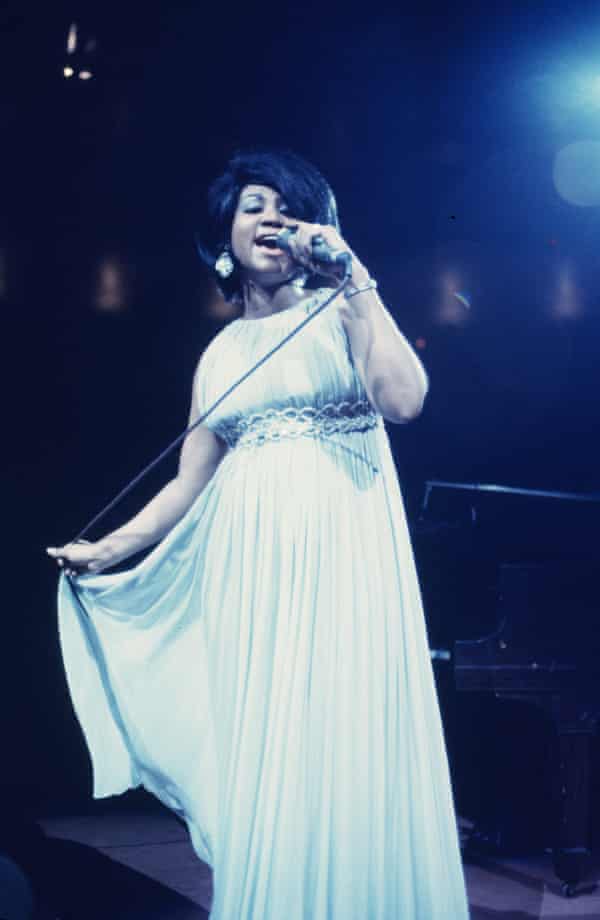
16. Mr DJ (5 for the DJ) (1975)
Her album You is usually pinpointed as the moment when Franklin's inventiveness stalled. In terms of material, it'southward not a patch on the previous year'southward Allow Me in Your Life, only the opening track Mr DJ is magic, a horn and telephone call-and-response vocal-laden strut that defies anyone in earshot not to dance.
15. Practice Correct Woman, Practice Right Human (1967)
The sessions for Franklin's kickoff Atlantic anthology were stormy; at one point they had to exist abased after a row involving Ted Wright, leaving Practise Right Adult female, Do Right Human being unfinished. Later, Franklin completed the vocal in one accept. Information technology's tempting to say yous can tell: her performance is calm but firm, precise and commanding.
14. The Weight (1969)
Maybe the greatest of Franklin'southward unfailingly brilliant reworkings of contemporary rock material – see also her versions of Bridge Over Troubled H2o and Elton John's Border Song – her take on The Band's The Weight is tender country soul, with a gospel vocal that belies Franklin'south claim she had no idea what the lyrics were about.
13. Drown in My Ain Tears (1967)
Fifty-fifty by Franklin'southward standards, the vocal on Drown in My Own Tears is infrequent, a summoning of hurting and inconsolable misery that gradually gains momentum until it reaches a startling peak of agony iii minutes in as she repeatedly wails the give-and-take "drown" in a fashion that is genuinely chilling.
12. I Say a Little Prayer (1968)
Not for the first time, Franklin took someone else's hit – a recent meg-seller for Dionne Warwick – and fabricated it utterly her own. Initially released as a B-side, her version was far tougher, lacked the easy-listening orchestration of the original and was subsequently acclaimed by one-half of its writing team, Burt Bacharach, as the definitive reading.
11. Phone call Me (1970)
Call Me was the just Franklin original on 1970's This Girl'southward in Love With You, but what an original: her piano playing pitched between soul and jazz, a pillowy – just non schmaltzy – orchestral organization past Arif Mardin, a song filled with longing and bruised optimism.
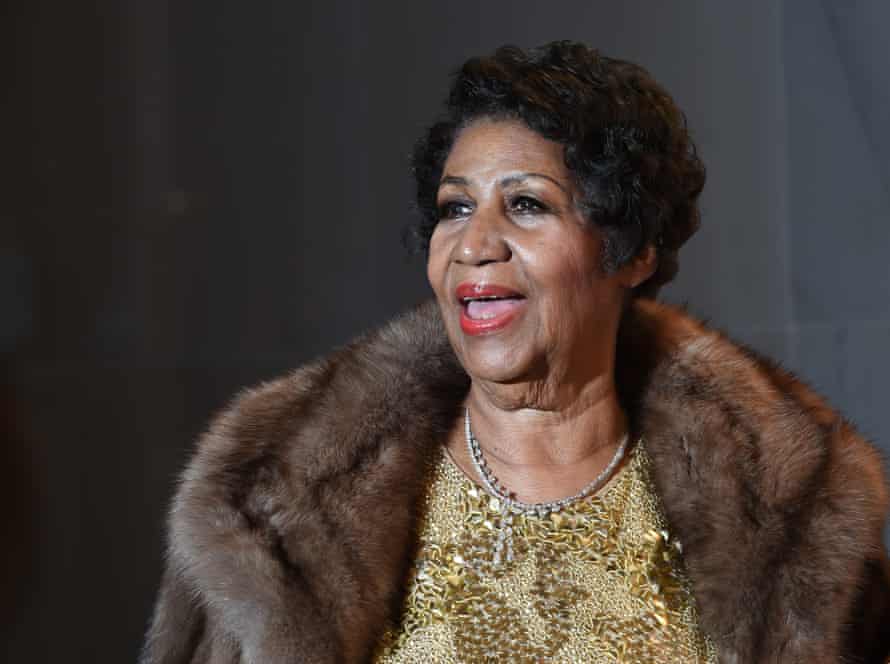
10. What Y'All Came to Do (2007)
Franklin's terminal decade saw some incredible live performances – not least at the 2022 Kennedy Centre Honors – only, as she was beset past sick-health, her recorded output was patchy. Recorded every bit a contractual obligation, this duet with John Legend unexpectedly turned out triumphant: upfront, wildly funky, the best affair she had done in 20 years.
nine. Until You Come Dorsum to Me (That's What I'm Gonna Exercise) (1974)
Her sister Erma lauded Franklin's power to "transform extreme pain to extreme beauty", which is exactly what happens on this Stevie Wonder co-write. The song is about romantic obsession, but Franklin turns information technology into something transcendent and enraptured, her voice soft, the backing warm and attracting.
8. Affections (1973)
The combination of Franklin and Quincy Jones should accept been triumphant, but 1973's Hey Now Hey fell some way short of expectation. If it had all been as a cracking every bit Affections, it would have been a dissimilar story. Everything about the song is sublime, from the silky organization to Franklin'southward emotional shift from vulnerability to resolution.
vii. Day Dreaming (1972)
Apparently about Franklin's thing with the Temptations singer Dennis Edwards, Day Dreaming is a fabulous piece of music. Languid and sexy, its wistful mood is ramped up by Donny Hathaway's otherworldly electrical pianoforte, the scattered, abstract bursts of flute and a lengthy, slightly eerie trounce-less outro.
6. Spirit in the Nighttime (1970)
The battle between the sacred and the profane that lurked at the heart of soul music was captured on the self-penned title track of Franklin'south 17th studio anthology, later sampled by Kanye West. Beautiful and episodic, Spirit in the Dark'due south sound is pure gospel, but the lyrics imply more than earthly pleasures.
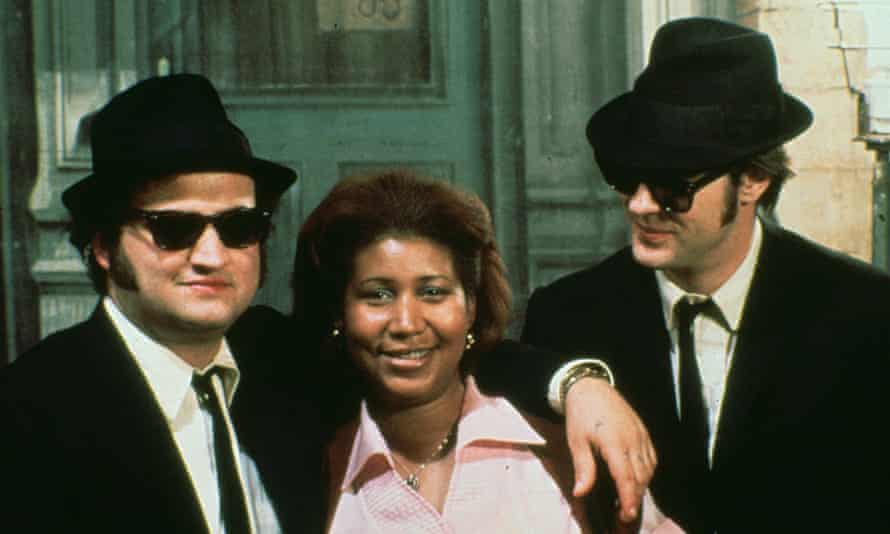
five. Recall (1968)
Ostensibly a vocal nearly a human relationship that has descended into gaslighting, Recollect seems to be driven by something else entirely. Recorded a week after Franklin sang at Martin Luther King's funeral, the repeated cry of "Liberty!" and the demand for listeners to "let yourself be free" conspicuously had other resonances, giving the song a fraught ability and bear upon.
4. You Make Me Experience Like a Natural Woman (1967)
When Frankin's star finally rose, it did then at a startling speed. Iv months after Respect hit, a songwriting team as respected as Goffin and King were writing material just for her. Fifty years on, over-familiarity hasn't blunted the touch of her performance: the way she shifts from the control of the verses to the euphoria of the chorus nevertheless sounds sublime.
3. Rock Steady (1972)
Initially at to the lowest degree, Franklin seemed imperiously capable of assimilating any new musical tendency into her sound, as demonstrated by the self-penned Rock Steady, her killer response to funk. It's an exquisite tight-merely-slinky groove, with a fabulous bassline, a vocal that manages to be raw simply perfectly controlled and an addictive call-and-response chorus.
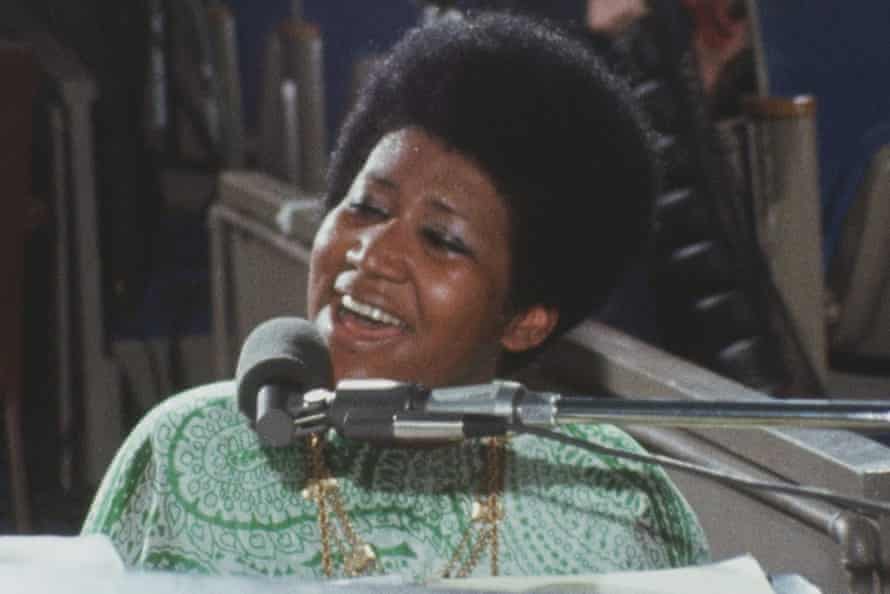
2. Amazing Grace (1972)
In reality, y'all could selection anything from 1972's Amazing Grace, the double live gospel set that contains the most boggling vocal performances of Franklin'south career. Only the title track might only be the near extraordinary of the lot, a brandish of potent, intuitive, shiver-inducing extemporisation that lasts for 10 minutes, without a 2d wasted.
ane. Respect (1967)
It wasn't just that Franklin'due south version of Respect was simultaneously tougher and catchier than Otis Redding'south original – the "Sock it to me" refrain and "R-East-S-P-E-C-T" hook were Franklin's additions – or that the song helped catapult her to distinction. It was that her functioning completely inverse the song'southward significant, from a homo demanding fealty from his married woman to an assertive, ballsy demand for equality that could have been applied to women's rights or black power, in the process helping to shift soul music into a new era when social consciousness composite with commerciality, an impossibly stiff combination. "The girl has taken that vocal from me," noted Redding, sagely. "From now on, information technology belongs to her."
Source: https://www.theguardian.com/culture/2019/nov/21/aretha-franklin-30-greatest-songs-ranked
0 Response to "Aretha Franklin a Rose Is Still a Rose Cover Art"
ارسال یک نظر